

Finance क्या है? Personal Finance, Saving, Investment और Financial Planning की पूरी जानकारी
आज के समय में Finance केवल बड़े investors या business owners के लिए जरूरी विषय नहीं है। नौकरी करने वाले व्यक्ति, दुकानदार, student, freelancer और छोटे business owner—हर किसी को अपने पैसे को सही तरीके से manage करने की जरूरत होती है।
अगर कमाई अच्छी है लेकिन खर्च का हिसाब नहीं है, emergency के लिए पैसा नहीं है या बिना समझे loan और investment लिया जा रहा है, तो financial problems हो सकती हैं।
इसलिए Personal Finance, Saving, Investment, Budgeting, Insurance, Loan और Financial Planning को समझना जरूरी है।
इस article में हम आसान हिंदी में जानेंगे कि Finance क्या है, Personal Finance क्या होता है, पैसे का budget कैसे बनाएं, saving कैसे करें, investment शुरू करने से पहले क्या देखें, emergency fund क्या है, loan लेते समय किन बातों का ध्यान रखें और financial planning कैसे करें।
नोट: यह article educational information के लिए है। किसी specific investment, loan, insurance या financial product को खरीदने का व्यक्तिगत सुझाव नहीं है। निवेश से पहले संबंधित official documents और applicable rules जरूर देखें।
Finance क्या है?
Finance का मतलब पैसे से संबंधित planning, management और decision-making से है।
सरल भाषा में:
पैसा कितना आ रहा है, कितना खर्च हो रहा है, कितना बच रहा है और उस पैसे का भविष्य के लिए सही उपयोग कैसे किया जाए—यह Finance का महत्वपूर्ण हिस्सा है।
Finance को broadly तीन हिस्सों में समझ सकते हैं:
- Personal Finance
- Business Finance
- Corporate/Public Finance
इस website पर हमारे लिए Personal Finance और Small Business Finance खास तौर पर महत्वपूर्ण हैं।
Personal Finance क्या है?
Personal Finance का मतलब अपने व्यक्तिगत पैसे को manage करना है।
इसमें शामिल हैं:
- Income
- Expenses
- Saving
- Emergency Fund
- Investment
- Insurance
- Loan
- Tax Planning
- Retirement Planning
- Financial Goals
उदाहरण के लिए अगर किसी व्यक्ति की monthly income ₹30,000 है, तो उसे यह पता होना चाहिए कि उसमें से कितना:
- घर के खर्च में
- bills में
- saving में
- investment में
- emergency fund में
जाना चाहिए।
Financial Planning क्या है?
Financial Planning का मतलब future financial goals को ध्यान में रखकर पैसे की योजना बनाना है।
मान लीजिए आपके तीन goals हैं:
- Emergency Fund बनाना
- नया घर खरीदना
- भविष्य के लिए investment करना
इन तीनों के लिए अलग-अलग time horizon और strategy हो सकती है।
इसलिए financial planning में सबसे पहले goals तय करना महत्वपूर्ण है।
Budget क्या होता है?
Budget आपकी income और expenses का planned structure है।
एक simple monthly budget इस तरह बनाया जा सकता है:
| Category | Example |
|---|---|
| Income | ₹30,000 |
| Essential Expenses | ₹15,000 |
| Saving | ₹5,000 |
| Investment | ₹4,000 |
| Insurance/Other | ₹2,000 |
| Flexible Expenses | ₹4,000 |
यह केवल उदाहरण है। हर व्यक्ति की financial situation अलग होती है।
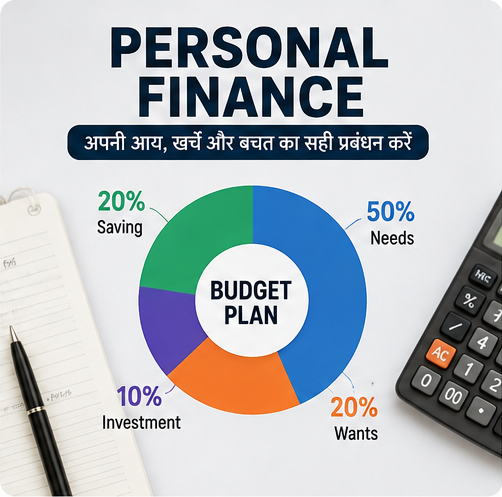
Budget बनाने का आसान तरीका
Step 1: Total Income लिखें
सभी regular income sources लिखें।
Step 2: Fixed Expenses लिखें
जैसे:
- Rent
- School/education
- EMI
- Regular bills
Step 3: Variable Expenses लिखें
जैसे:
- Shopping
- Eating out
- Entertainment
- Travel
Step 4: Saving अलग करें
Income आने के बाद saving के लिए amount निर्धारित करें।
Step 5: Monthly Review करें
महीने के अंत में देखें कि actual spending budget के अनुसार रही या नहीं।
Saving और Investment में क्या अंतर है?
यह Finance का बहुत महत्वपूर्ण concept है।
Saving
Saving का उद्देश्य आम तौर पर पैसा सुरक्षित रखना और short-term जरूरतों के लिए उपलब्ध रखना होता है।
Investment
Investment में पैसा ऐसे financial assets में लगाया जा सकता है जिनका value समय के साथ बढ़ या घट सकता है।
उदाहरण:
- Mutual Funds
- Shares
- Bonds
- अन्य investment products
Investment में return guaranteed नहीं होता, जब तक किसी specific product में वैधानिक रूप से guarantee न हो।
इसलिए Saving और Investment को एक ही चीज नहीं समझना चाहिए।
Emergency Fund क्या है?
Emergency Fund वह पैसा है जिसे अचानक financial जरूरत पड़ने पर इस्तेमाल किया जा सके।
उदाहरण:
- अचानक medical expense
- income में temporary interruption
- जरूरी repair
- unexpected household expense
Emergency fund का उद्देश्य high-risk investment करना नहीं बल्कि financial safety cushion बनाना है।
कितना emergency fund रखना चाहिए, यह व्यक्ति के:
- Monthly expenses
- Income stability
- Family responsibilities
- Existing insurance
- Job/business stability
पर निर्भर करता है।
Investment शुरू करने से पहले क्या देखें?
Investment से पहले केवल “कितना return मिलेगा?” यह पूछना पर्याप्त नहीं है।
इन points को समझें:
1. Risk
पैसे की value कितनी घट-बढ़ सकती है?
2. Return
Expected return क्या है और क्या वह guaranteed है?
3. Time Horizon
पैसा कितने समय के लिए invest करना है?
4. Liquidity
जरूरत पड़ने पर पैसा कितनी आसानी से निकाला जा सकता है?
5. Charges
कौन-कौन से fees और charges लागू होते हैं?
6. Tax
Investment से जुड़े applicable tax rules क्या हैं?
Mutual Fund क्या है?
Mutual Fund एक investment vehicle है जिसमें कई investors का पैसा pool करके scheme के objectives के अनुसार securities/assets में invest किया जाता है।
Mutual funds के अलग-अलग categories हो सकते हैं और उनके risks भी अलग हो सकते हैं।
इसलिए केवल “Mutual Fund” सुनकर यह मानना सही नहीं है कि सभी mutual funds एक जैसे हैं।
SIP क्या है?
SIP यानी Systematic Investment Plan एक तरीका है जिसके माध्यम से investor किसी mutual fund scheme में निर्धारित amount को नियमित intervals पर invest कर सकता है।
उदाहरण:
अगर कोई व्यक्ति हर महीने ₹2,000 invest करने का निर्णय लेता है, तो वह eligible mutual fund scheme में SIP के माध्यम से regular investment कर सकता है।
लेकिन SIP में भी market-linked investments का risk हो सकता है।
SIP guaranteed return scheme नहीं है।
Compound Interest क्या है?
Compound interest को सरल भाषा में समझें तो इसमें earned interest/return पर भी आगे return/interest मिल सकता है, depending on the financial product and compounding structure.
समय लंबा होने पर compounding का effect महत्वपूर्ण हो सकता है।
इसीलिए early financial planning का फायदा हो सकता है।

Loan क्या है?
Loan वह राशि है जो lender द्वारा borrower को निर्धारित terms और conditions के तहत दी जाती है और borrower उसे repayment schedule के अनुसार वापस करता है।
Loan में सामान्यतः शामिल हो सकते हैं:
- Principal
- Interest
- Processing Fee
- Other charges
- Repayment schedule
Loan लेने से पहले केवल EMI नहीं देखें।
Total repayment amount भी समझें।
Hey! Join me in making fast & secure UPI payments through Bajaj Pay UPI!
Step 1: Download the Bajaj Finserv App
Step 2: Enter my referral code: SZSE1S or 839083694983 while creating your UPI
GET YOU EARN MONEY – Rs500 DIRECTLY BANK ACCOUNT
Step 3: Select your bank and link your bank account
Step 4: On your first payment to another user, both of us will get an assured reward
Personal Loan लेते समय क्या देखें?
Personal loan लेने से पहले:
- Interest rate
- APR/total cost, जहां disclosed हो
- Processing fee
- Prepayment/foreclosure terms
- Late payment charges
- Loan tenure
- Total repayment
check करें।
कम EMI का मतलब जरूरी नहीं कि loan सस्ता है। लंबी tenure में total interest अधिक हो सकता है।
Credit Score क्या है?
Credit score व्यक्ति की credit history से संबंधित एक numerical indicator है।
Lenders credit-related decisions में credit history और अन्य factors को देख सकते हैं।
Credit score को बेहतर बनाए रखने के लिए:
- EMI समय पर pay करें
- Credit obligations को responsibly manage करें
- अनावश्यक loan applications से बचें
- Credit utilization को responsibly manage करें
- Credit report में errors हों तो उन्हें check करें
ध्यान रखें कि credit score अकेला loan approval की guarantee नहीं है।
Credit Card का सही उपयोग कैसे करें?
Credit card को free money समझना गलत है।
अगर card का bill समय पर पूरा pay नहीं किया जाता, तो interest और charges लागू हो सकते हैं।
Responsible usage के लिए:
- जितना comfortably repay कर सकें उतना ही खर्च करें
- Due date याद रखें
- Statement check करें
- Unnecessary debt से बचें
- Card की fees और terms समझें
Insurance और Investment में अंतर
यह भी बहुत महत्वपूर्ण distinction है।
Insurance
मुख्य उद्देश्य financial risk से protection देना है।
उदाहरण:
- Health Insurance
- Life Insurance
- Motor Insurance
Investment
मुख्य उद्देश्य wealth creation या financial goals के लिए money grow करना हो सकता है।
इसलिए insurance और investment के purpose अलग हो सकते हैं।
Health Insurance क्यों महत्वपूर्ण हो सकता है?
Health-related expenses अचानक बढ़ सकते हैं।
Health insurance eligible medical expenses के लिए policy terms के अनुसार financial protection दे सकता है।
Policy लेते समय देखें:
- Coverage
- Sum insured
- Waiting periods
- Exclusions
- Network hospitals
- Premium
- Claim process
Policy document ध्यान से पढ़ना जरूरी है।
Life Insurance किसके लिए महत्वपूर्ण हो सकता है?
Life insurance का मुख्य उद्देश्य policyholder की मृत्यु की स्थिति में eligible beneficiaries को financial protection देना हो सकता है।
यह विशेष रूप से उन लोगों के लिए महत्वपूर्ण हो सकता है जिन पर:
- Family financially dependent है
- Loan obligations हैं
- बच्चों की future needs हैं
लेकिन सही insurance amount व्यक्ति की financial situation पर निर्भर करता है।
Financial Goals कैसे तय करें?
Goals को तीन categories में बांट सकते हैं:
Short-Term Goals
लगभग कुछ महीनों से कुछ वर्षों तक के goals।
Medium-Term Goals
कुछ वर्षों के goals।
Long-Term Goals
कई वर्षों के goals जैसे retirement planning।
हर goal के लिए:
Goal + Amount + Time + Monthly Contribution
लिखना उपयोगी है।

₹10 लाख का Financial Goal कैसे Plan करें?
मान लीजिए आपका लक्ष्य भविष्य में ₹10 लाख जमा करना है।
सबसे पहले तय करें:
- Goal कब तक चाहिए?
- अभी कितनी savings है?
- हर महीने कितना contribute कर सकते हैं?
- Investment risk कितना स्वीकार कर सकते हैं?
- कौन से financial products suitable हैं?
यहां केवल return assumption के आधार पर कोई fixed SIP amount बताना उचित नहीं है, क्योंकि market returns guaranteed नहीं होते।
Financial Freedom क्या है?
Financial Freedom का अर्थ broadly ऐसी financial स्थिति से हो सकता है जहां व्यक्ति के पास अपने जरूरी खर्च और future goals को support करने के लिए पर्याप्त financial resources और control हो।
यह केवल बहुत अधिक पैसा होने का नाम नहीं है।
इसके लिए जरूरी हो सकता है:
- Controlled expenses
- Emergency fund
- Manageable debt
- Adequate protection
- Long-term investments
- Multiple/Stable income sources
Business Owner के लिए Finance क्यों जरूरी है?
अगर आप business करते हैं तो personal finance के साथ business finance समझना भी जरूरी है।
Business में track करें:
- Sales
- Purchase
- Gross margin
- Operating expenses
- Inventory
- Receivables
- Payables
- Cash flow
केवल sales ज्यादा होना profit की guarantee नहीं है।
Business Finance और Personal Finance अलग क्यों रखें?
अगर business का पैसा और personal खर्च पूरी तरह mix हो जाएं तो actual business profit समझना मुश्किल हो सकता है।
इसलिए जहां संभव हो:
Business Income → Business Expenses → Business Profit
का अलग record रखें।
इससे financial planning और accounting ज्यादा स्पष्ट हो सकती है।
Inventory भी एक Financial Asset है
Retail और wholesale business में stock में पैसा लगा होता है।
उदाहरण के लिए mobile accessories business में:
- Mobile Covers
- Tempered Glass
- Chargers
- Cables
- Batteries
- Display Folder
- Charging Flex
- कम निवेश में BUSINESS कैसे शुरू करें? 2026 के Best Small Business Ideas
जैसे products inventory में हो सकते हैं।
अगर stock लंबे समय तक नहीं बिकता, तो working capital block हो सकता है।
इसलिए Inventory Management भी Finance का महत्वपूर्ण हिस्सा है।

Finance में किन गलतियों से बचें?
❌ बिना Budget के खर्च करना
हर महीने spending track करें।
❌ Emergency Fund के बिना high-risk investment करना
पहले financial safety देखें।
❌ Loan की केवल EMI देखना
Total repayment और interest cost भी देखें।
❌ बिना समझे Investment करना
Product का risk और terms समझें।
❌ Insurance को Investment समझना
दोनों के objectives अलग हो सकते हैं।
❌ Credit Card को Extra Income मानना
Credit card एक borrowing facility है।
❌ Business और Personal Money Mix करना
अलग records रखना बेहतर है।
Beginner के लिए Simple Financial Plan
अगर कोई व्यक्ति आज से financial planning शुरू करना चाहता है, तो यह basic roadmap उपयोगी हो सकता है:
Step 1
Monthly income calculate करें।
Step 2
सभी expenses लिखें।
Step 3
Unnecessary खर्च identify करें।
Step 4
Emergency fund बनाना शुरू करें।
Step 5
High-cost debt को responsibly manage करें।
Step 6
Appropriate insurance coverage पर विचार करें।
Step 7
अपने financial goals तय करें।
Step 8
Goal और risk के अनुसार investment options research करें।
Step 9
हर 6–12 महीने financial plan review करें।
Finance सीखने के लिए किन Topics पर ध्यान दें?
अगर आप personal finance को अच्छी तरह समझना चाहते हैं तो इन topics को क्रम से सीखें:
- Budgeting
- Saving
- Emergency Fund
- Banking
- Credit Score
- Credit Card
- Loan
- Insurance
- Mutual Funds
- SIP
- Stock Market
- Tax
- Retirement Planning
- Financial Planning
- Business Finance
इन सभी topics पर KingFy.in पर अलग-अलग detailed articles बनाए जा सकते हैं।
- SIP क्या है?Mutual Fund क्या है?
- Credit Score कैसे बढ़ाएं?
- Personal Loan क्या है?
- Best Credit CardsInsurance क्या है?
- Financial Planning कैसे करें?
- Business Finance
FAQ — Finance से जुड़े महत्वपूर्ण सवाल
Finance क्या है?
Finance पैसे की planning, management, saving, investment, borrowing और financial decision-making से संबंधित क्षेत्र है।
Personal Finance क्या है?
व्यक्ति की income, expenses, saving, investment, insurance, loan और financial goals को manage करना Personal Finance कहलाता है।
Saving और Investment में क्या अंतर है?
Saving मुख्यतः money preservation और short-term needs के लिए होती है, जबकि investment में wealth growth के उद्देश्य से money को financial assets में लगाया जा सकता है और इसमें risk हो सकता है।
SIP क्या है?
SIP यानी Systematic Investment Plan, जिसके माध्यम से eligible mutual fund scheme में निर्धारित राशि नियमित अंतराल पर invest की जा सकती है।
क्या SIP में return guaranteed होता है?
नहीं। Market-linked mutual fund investments में returns guaranteed नहीं होते।
Emergency Fund कितना होना चाहिए?
यह आपकी income, expenses, job/business stability और family responsibilities पर निर्भर करता है। आम तौर पर कई महीनों के essential expenses को cover करने का लक्ष्य रखा जाता है, लेकिन exact amount व्यक्ति-specific होता है।
Credit Score क्यों महत्वपूर्ण है?
Credit score और credit history lenders के credit decisions में factors हो सकते हैं। लेकिन loan approval केवल score पर निर्भर नहीं करता।
Loan लेते समय सबसे जरूरी क्या देखें?
Interest/total cost, tenure, EMI, processing fee, late charges, prepayment terms और total repayment amount को समझें।
Insurance और Investment में क्या अंतर है?
Insurance मुख्यतः financial risk protection के लिए होता है, जबकि investment का उद्देश्य wealth creation या financial goals हो सकता है।
निष्कर्ष
Finance का मतलब केवल stock market या investment नहीं है। एक मजबूत financial life की शुरुआत सही budgeting, saving, emergency planning और responsible borrowing से होती है।
इसके बाद व्यक्ति अपने goals, risk tolerance और time horizon के अनुसार insurance और investments की planning कर सकता है।
अगर आप business करते हैं, तो personal finance के साथ business finance, inventory management और cash flow को समझना भी उतना ही जरूरी है।
सबसे महत्वपूर्ण बात:
पहले पैसे को manage करना सीखें, फिर पैसे को grow करने की strategy बनाएं।
KingFy.in पर Finance category में हम Saving, Investment, SIP, Mutual Funds, Loan, Credit Card, Insurance, Tax, Business Finance और Financial Planning जैसे topics पर आसान हिंदी में practical जानकारी प्रकाशित कर सकते हैं।
Search
- finance क्या है और कैसे काम करता है
- personal finance क्या है
- financial planning कैसे करें
- पैसे को manage कैसे करें
- saving और investment में अंतर
- emergency fund क्या है
- SIP क्या है
- mutual fund क्या है
- loan लेते समय क्या देखें
- credit score क्या है
2 thoughts on “Finance क्या है? Personal Finance, 100% Saving, Investment और Planning”